EUROPA! Film Festival, 2026
Michelangelo Antonioni: Modernist Master Retrospective
L’avventura (1960) Introduction
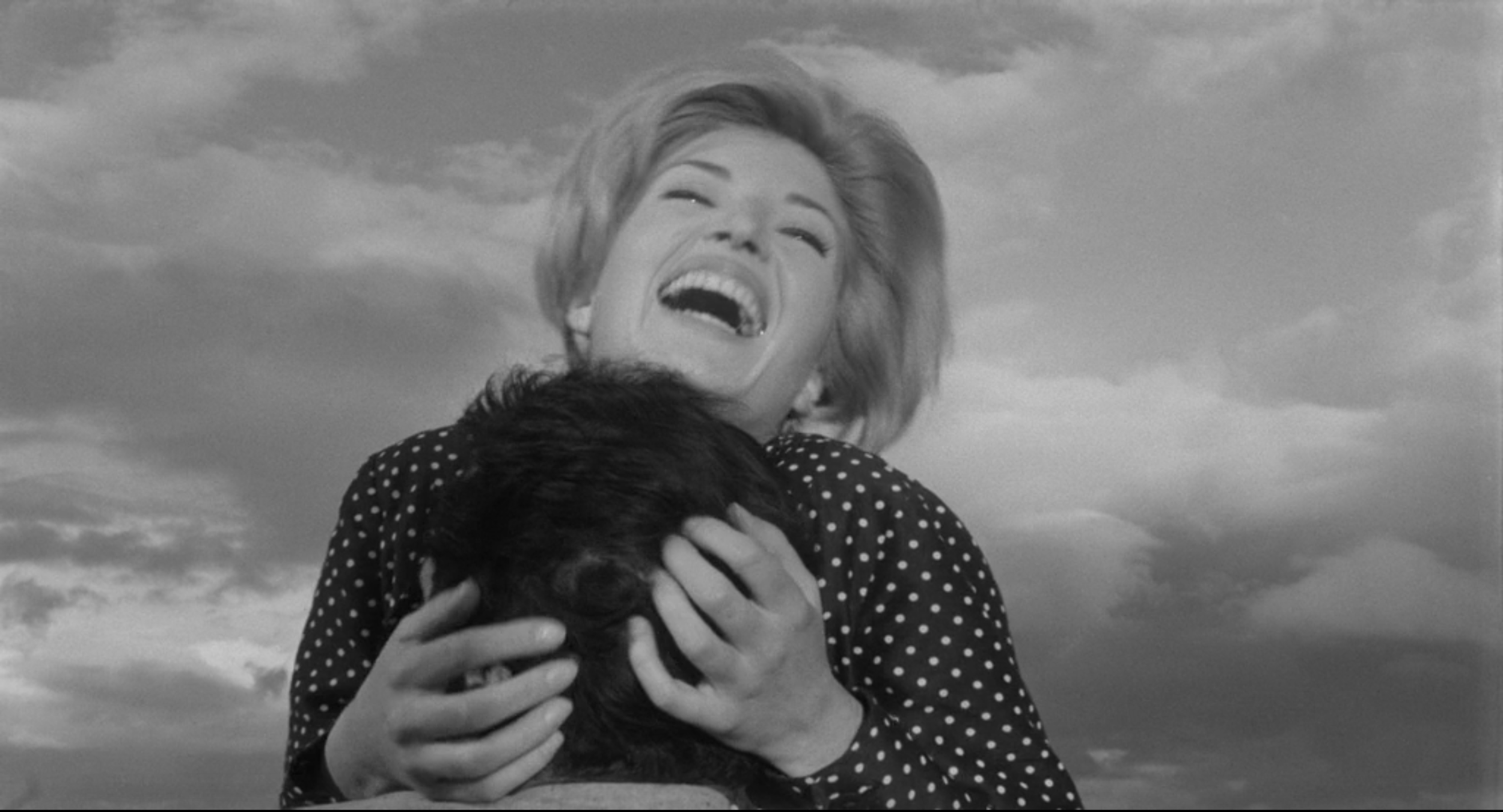
In celebration of one of cinema’s most seminal achievements and the broader spirit of EUROPA!’s retrospective, it is my pleasure to share a few words ahead of tonight’s screening of L’avventura — a film that captures the defining vision of Michelangelo Antonioni.
In drawing attention to L’avventura’s enduring resonance, I want to emphasise the film’s boundary-pushing nature, as well as the broader significance of Antonioni’s work.
***********************
It is no overstatement to suggest that L’avventura redefined the language of art cinema. Emerging as a key moment in the development of ‘modern’ cinema, Antonioni’s film marked not only a pivotal turning point in his own career, but also in the medium’s expanding possibilities. Released in 1960 alongside Jean-Luc Godard’s Breathless, Luchino Visconti’s Rocco and His Brothers, and Federico Fellini’s La Dolce Vita, L’avventura signified a departure from traditional narrative form, as well as from the strictures of neo-realism. While thematic and stylistic consistencies can be observed across his pre-1960s films — such as Le amiche (The Girlfriends) (1955) and Il grido (The Cry) (1957) — it is with L’avventura that Antonioni unsettled the foundational assumptions surrounding cinematic perception.
L'avventura is a film enveloped in unknowability and abstraction. Antonioni willingly decentralises conventional character psychology, while resisting a sense of traditional emotional catharsis. The viewer appears persistently estranged from the narrative’s pulse. Likewise, the film frustrates any coherent relationship between spatial and temporal realms — time and space are wrought with abstraction. L’avventura’s unpredictable rhythms — intensified through extended takes and elliptical cuts — both exaggerate and tighten our experience ofduration. Assuming a subjectivity that appears as neither objective nor subjective, the camera seamlessly cuts through time and space, rendering their dynamic fluid. Within this mysterious reality, Antonioni subtly frustrates — and perhaps even deconstructs — polarising tensions. Distinctions between the fictive and the authentic, the familiar and the unfamiliar, and the banal and the devastating gradually blur, as meaning itself is thematized as an inherently allusive and unstable sensation.
Undermining any conceptual and aesthetic dogmas relating to cinematic narrative, L’avventura squarely positions the viewer within spaces of uncertainty and ambiguity. Natural and urban landscapes swallow characters, producing an obscured relationship between the internal and external. Mirroring the film’s plot, the audience is led only by traces and echoes. Persistently asking more questions than providing answers, L’avventura ultimately renders fruitless the urge for audiences to rationalise their aesthetic encounters. In the Antonionian film, irresolution becomes the very source of resolution. Amplifying L’avventura’s sense of mystery, Antonioni’s characters often appear — rather absurdly — devoid of subjectivity, his camera frequently dwells on absent spaces, and the plotline itself seems to wither into stasis, leaving only existential malaise to linger.
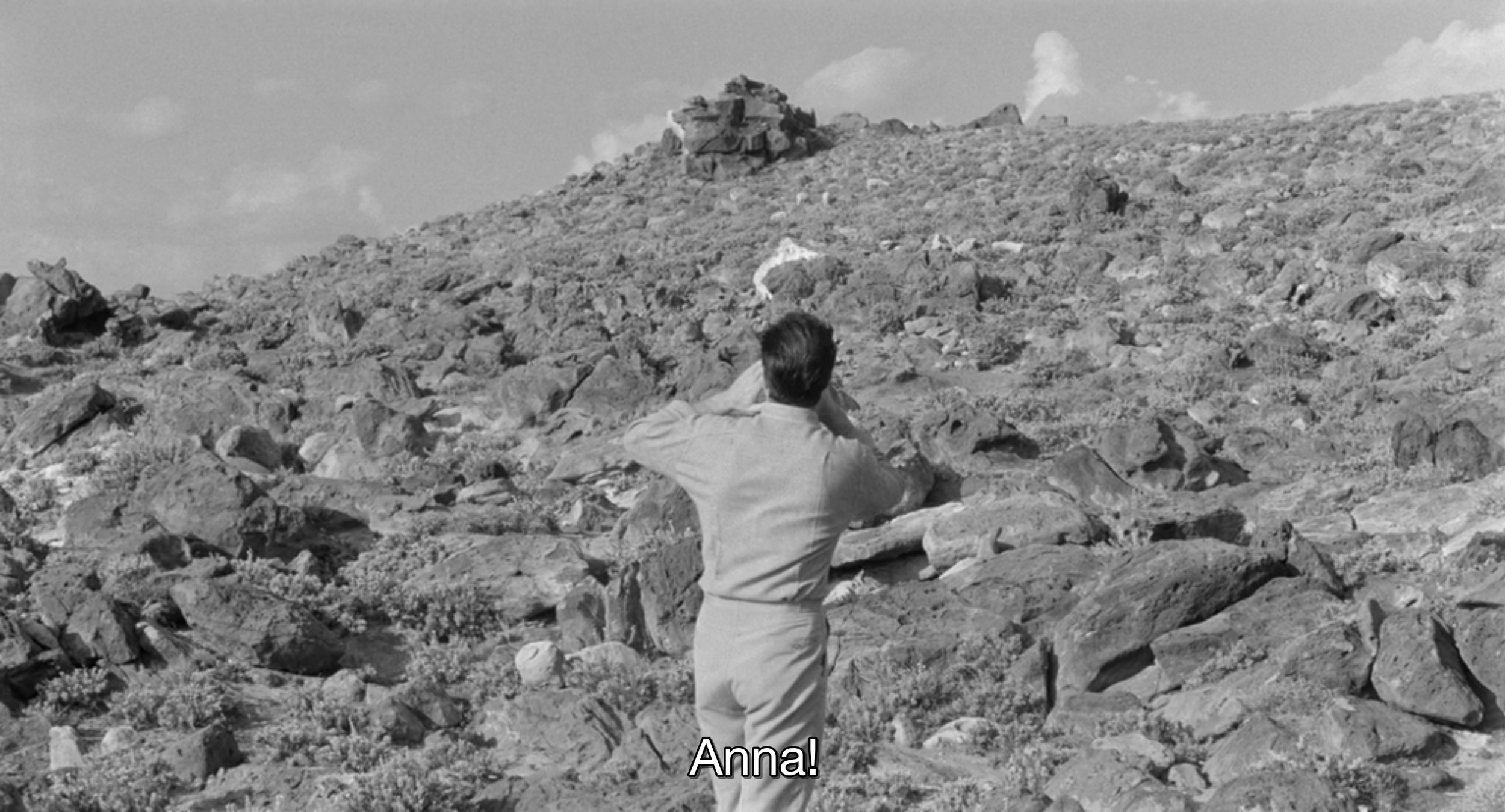
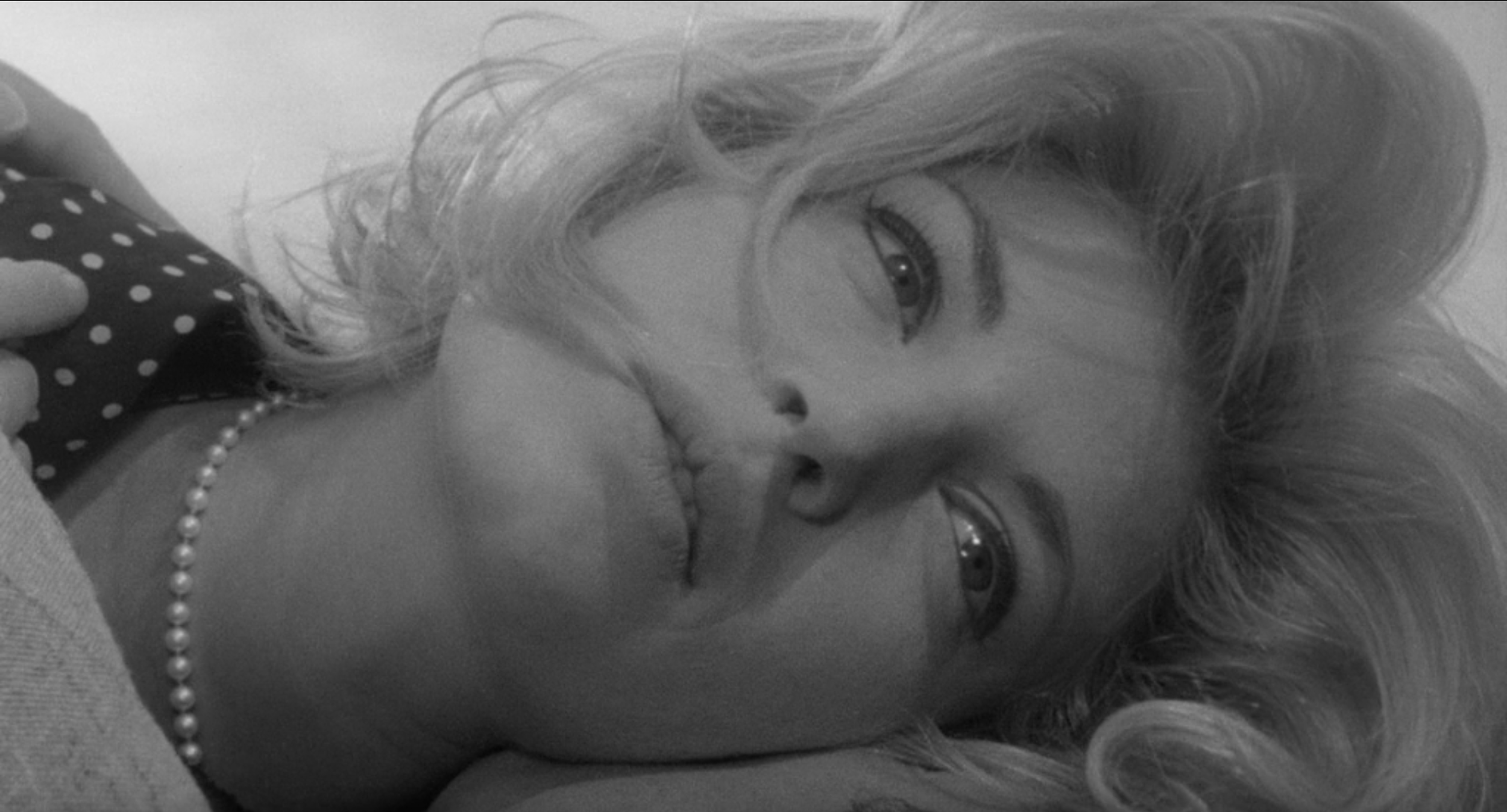
The radical, boundary-pushing nature of L’avventura was immediately evident at the film’s tumultuous premiere at the 1960 Cannes Film Festival. Increasingly frustrated by the film’s exaggerated durational affect and enigmatic narrative structure, audience members reportedly hissed, catcalled, and booed throughout the screening. This hostility ultimately led Antonioni and the film’s leading actress — then largely undiscovered Monica Vitti — to flee the cinema at its conclusion. However, a group of critics and filmmakers, including the legendary director Roberto Rossellini, initiated a petition in an effort to arrange a second screening. Here, a dramatic shift in critical reception followed, with supporters now championing Antonioni’s radically inventive cinema. Cementing Antonioni’s status among the most influential auteurs in European art cinema, L’avventura was awarded the prestigious Cannes Jury Prize for its ambition to “create a new film language” — an acknowledgement that has proven increasingly accurate.
In a particularly illuminating passage, Antonioni’s Cannes statement observes a fracture, noting that:
Today the world is endangered by an extremely serious split between a science that is totally and consciously projected into the future, and a rigid and stereotyped morality that all of us recognise as such and yet sustain out of cowardice and sheer laziness.
This split materialises thematically and stylistically throughout L’avventura. This is evident both in the film’s temporal and spatial confusion, and in the characters’ sense of unnaturalness. The film embodies a collision — as Antonioni observes — between future-orientated thinking and a rigid, outdated morality.
L'avventura often attracts the label ‘slow cinema.’ Likewise, commentators and critics typically emphasise the film’s sense of ‘coldness’, noting how the narrative is shrouded by a crippling sense of alienation. These observations are, in part, certainly reasonable. Nonetheless, while Antonioni consistently infuses the narrative with moments of durational tension and pervasive sensations of ennui, my reading of the film seeks to emphasise its vibrancy and dynamism — however paradoxical these descriptors may at first appear.
Antonioni’s masterpiece far exceeds a mere tale of bourgeois alienation and moral apathy. Emerging from the film’s void-like affect and perpetually unravelling mystery is a deeply attentive exploration of the enigmatic nature of reality. As close friend and collaborator, Carlo di Carlo remarked, “we must not forget that for many years Antonioni himself stood in front of a wall of people who would not admit that his gaze, cold and detached in appearance, was a means for understanding reality more deeply.” On one level, L’avventura offers a devastating portrait of a collective inability to foster emotional connection. Yet, on another, the film explores the mysterious structures governing relationships between not only individuals, but those shared with history, space, and time. Beneath L’avventura’s often-languid pacing, emotionally devoid figures, and sense of perpetual ‘inaction’ lie far greater ontological and epistemic frailties.
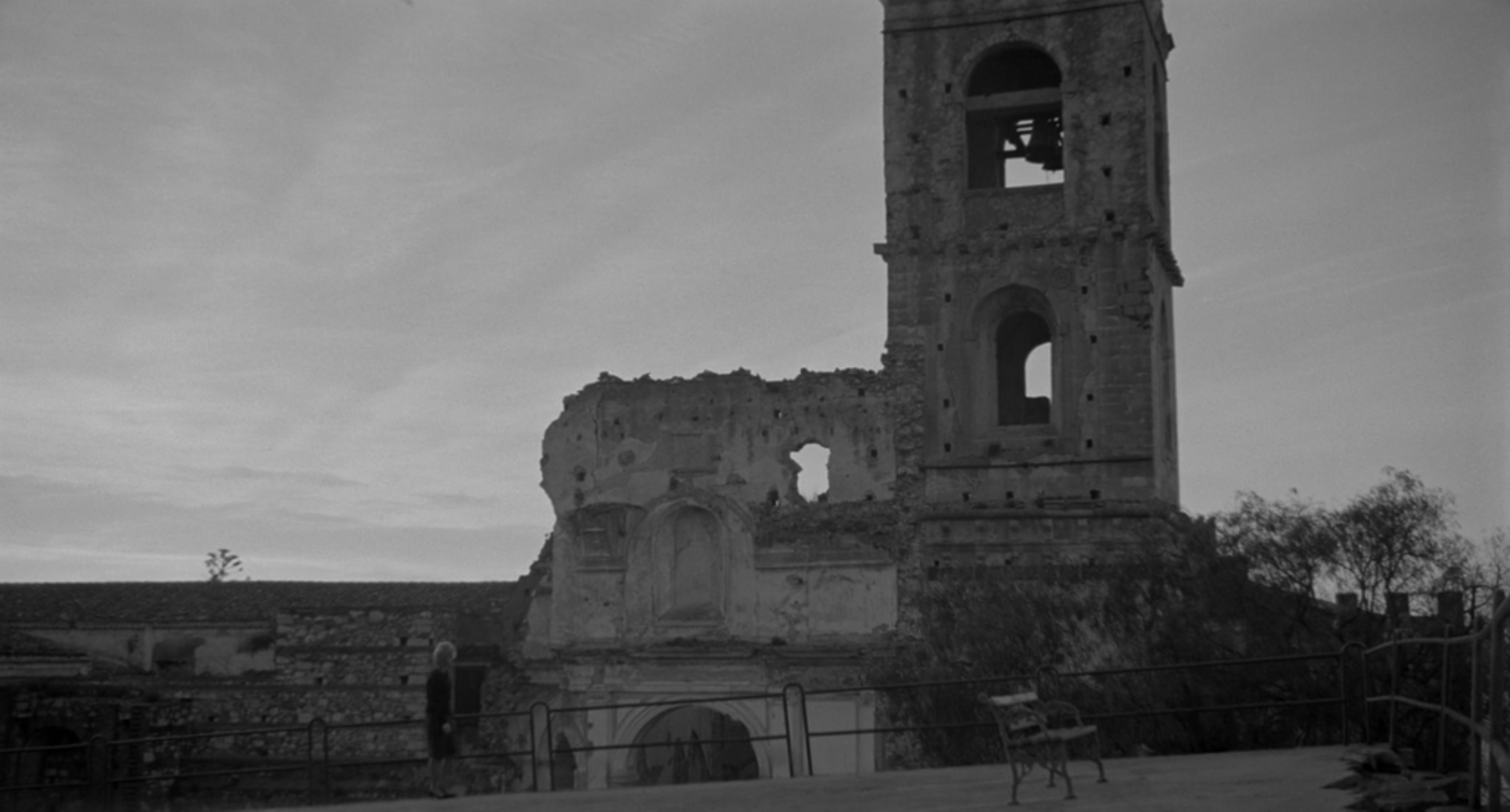
In June 2025, I was fortunate to conduct archival research at the Cineteca di Bologna. Here, I was granted private access to the most comprehensive collection of Antonioni archives in the world — assembled and donated by Carlo di Carlo. From my experience in Bologna, it became further apparent that Antonioni was an artist who was continually marvelled by his rapidly evolving modern world. As noted above, these films are by no means strictly cynical. While titles such as L’avventura, La notte, and L’eclisse certainly capture the unforgiving conditions of their realities, these films are equally attracted to its beauty and splendour. Antonioni does not set out to primarily critic modernity, nor to depict a pessimistic representation of contemporary morality. Rather, as we will see in L’avventura, a fascination lies within the magnitudes of this aforementioned moral fracture — in the words of Antonioni, a ‘sickness of Eros.’
L’avventura foregrounds many of the stylistic components distinctive to Antonioni’s cinema. Like those emphasised above, the film deepens Antonioni’s interests in the fragile dialect between absence and presence — most prominently crystallised during L’eclisse’s mesmerically haunting closing sequence. The heightened absence of non-diegetic sound is another key technical device L’avventura employs. Extended moments capture only atmospheric noise, as the film’s visual landscapes are often consumed by an estranged sense of near silence. Antonioni’s fixation on sound intensifies throughout his forthcoming title, La notte — a film that can aptly be described as much an exercise in listening as it is viewing. In addition to these, L’avventura spotlights Antonioni’s distinct sense of comedy and satire. Despite the film’s brooding stylistic nature and mood, I encourage audiences to indulge in the absurd, more light-hearted moments of L’avventura. Notably, the film also signifies the first major collaboration between Antonioni and Vitti — a relationship that would define the ‘trilogy’ films. Here, Vitti’s characters remain among the most notable, and for their time, progressive depictions of female interiority on screen.
Though over sixty years since their releases, works such as L’avventura, La notte, and L’eclisse continue to arguably feel more modern, more poignant, than ever before. Perhaps, we have not progressed far beyond the ‘rigid and stereotyped morality’ that Antonioni acutely observed within his Cannes statement in 1960. Perhaps these films lay bare the texture of our unknowable realities, articulating the ever-unfolding mysteries that characterise our human condition…
Thank you very much, and I hope you enjoy this wonderful film.