Out of the Blue, and Into the Black
Chloé Bourgès on Activism, Rebellion, and Opening a Micro-Cinema
January 2026: Paris, France
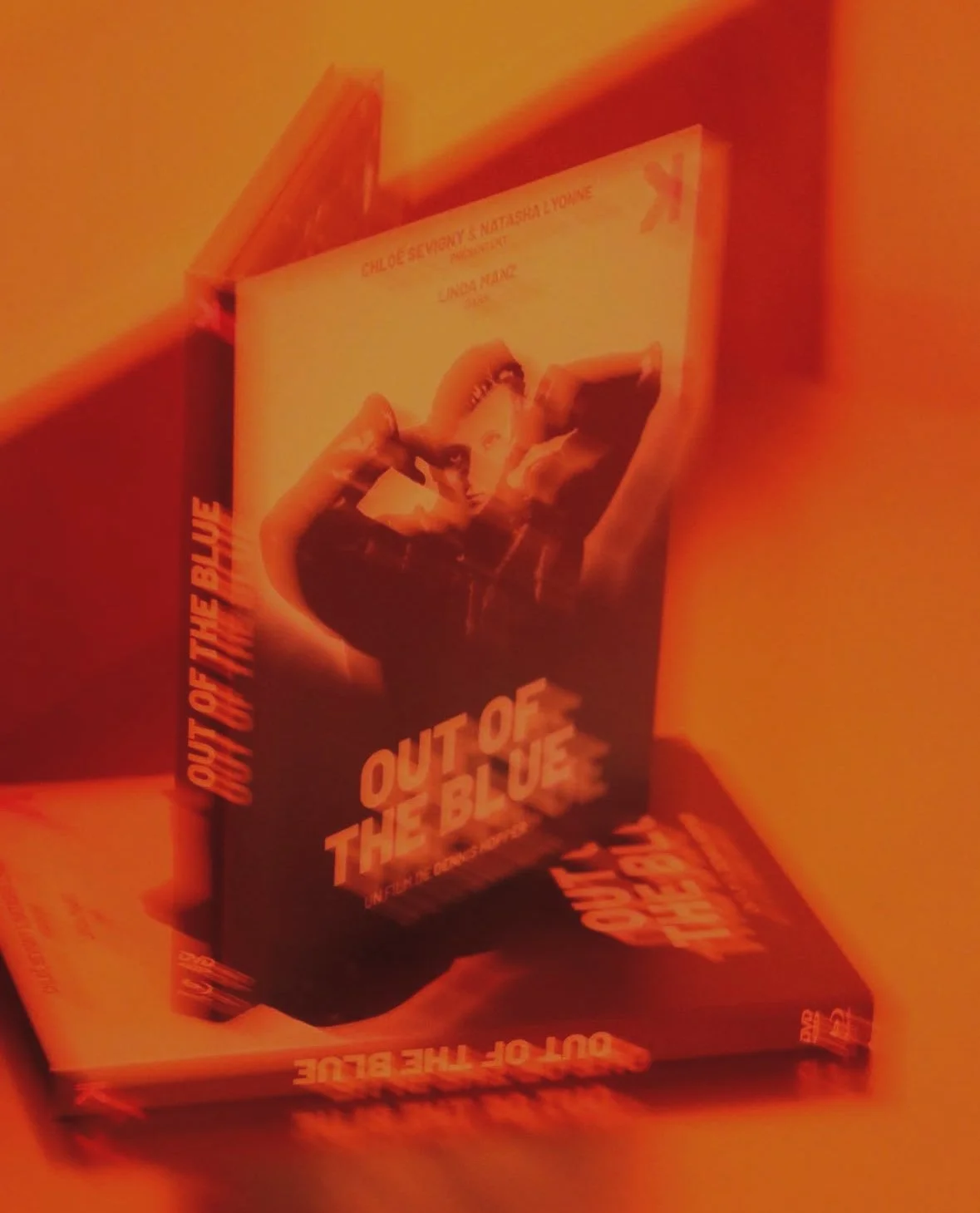
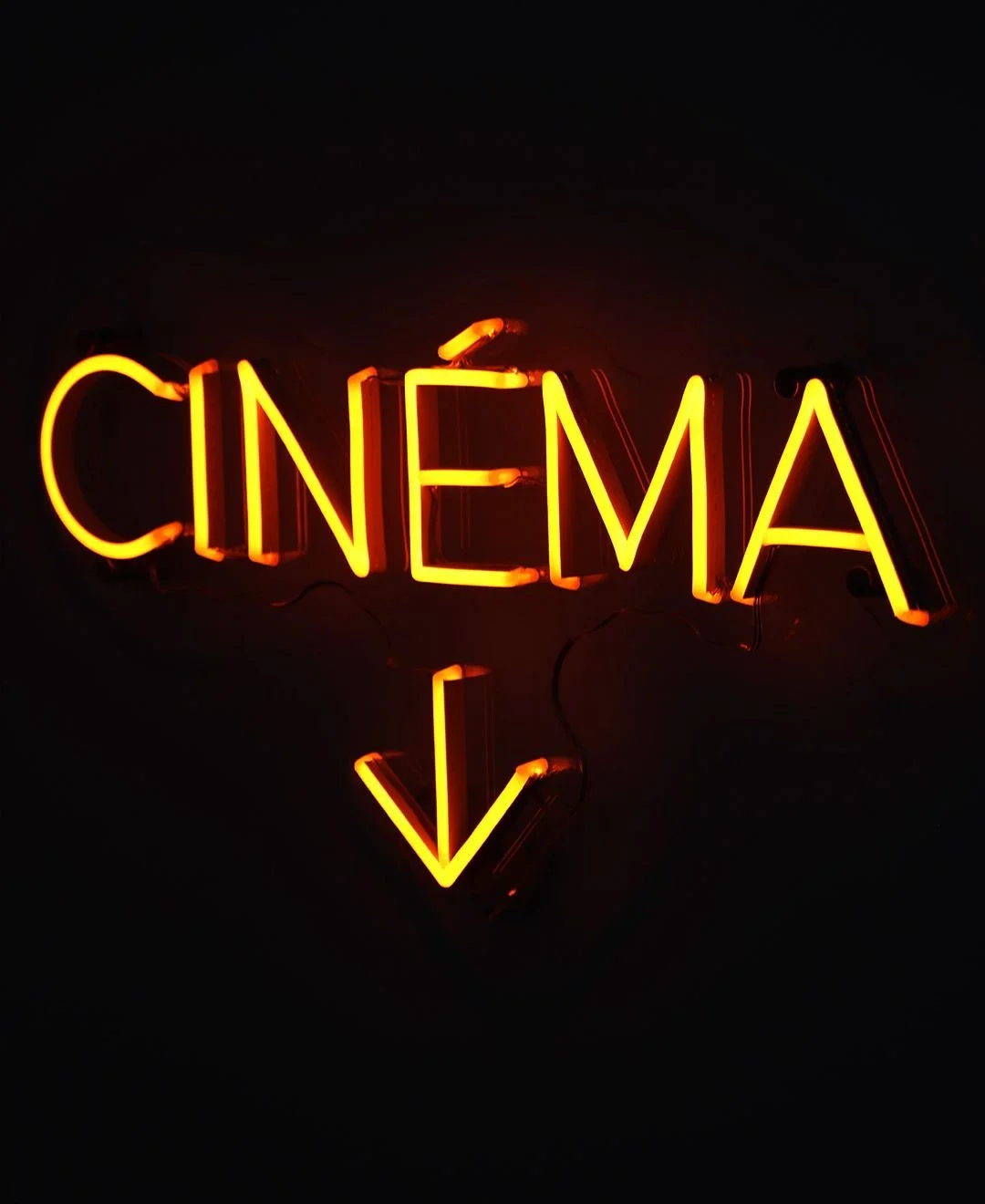
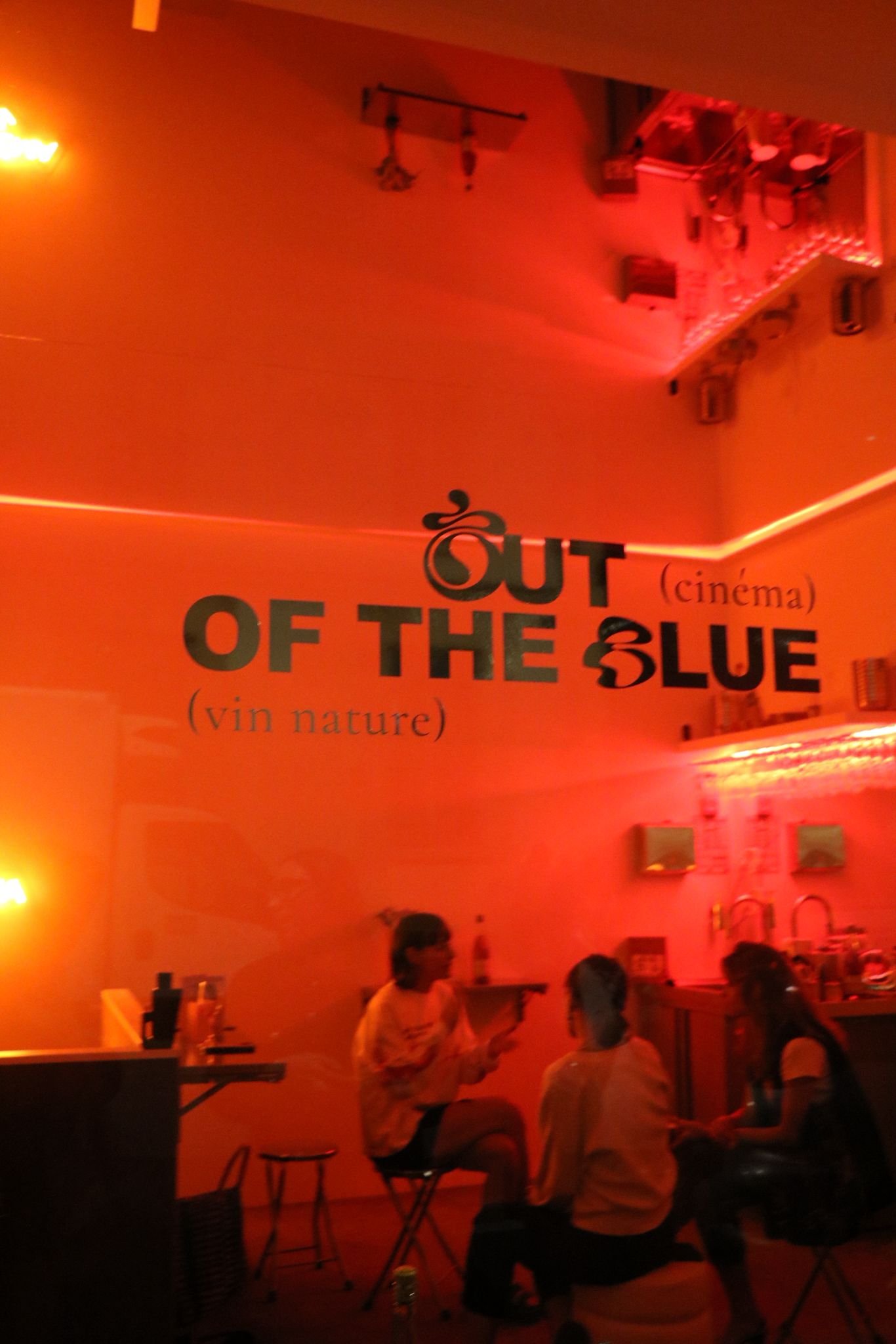
Strolling along Rue Saint-Maur this previous summer, my girlfriend and I serendipitously stumbled upon a copy of Dennis Hopper’s Out of the Blue resting in a shopfront window. Both intrigued and excited, we entered the space, which revealed itself as a micro-cinema and natural wine bar that shared the same name as Hopper’s 1980 masterpiece. Proceeding a brief introduction from the owner, Chloé Bourgès, we were informed that Werner Herzog’s La Soufrière: Waiting for an Inevitable Catastrophe (1977) was currently screening. Dismissing the evening ‘s plans, we descended the stairs and entered the intimacy of Out of the Blue’s micro-cinema. Enveloped by the dark blue ambience, we sunk into the film...
Afterwards, the three of us sat outside and shared a glass of wine. In discussing the space, her relationship with independent cinema, and her upbringing, it became glaringly evident that Chloé carries a remarkable career trajectory — one marked by defiance, rebellion, and curiosity.
Note: This interview has been edited for length and clarity.
Oscar Bloomfield: You’ve emphasised the influence of a strong female-centric upbringing. Alongside your mother, you mention early encounters with other strong female figures. I recall reading about your Godmother, Antoinette Fouque, and her work. What was it like growing up in this environment?
Chloé Bourgès: I have very early memories as a child of being around a group of females — part of what is described as the ‘Paris 68’ — who were activists for women’s rights, protesting for abortion, and other justices. It was a big movement, and one of the leaders was my Godmother, Antoinette Fouque. At the time, there were many activist circles. She was one of the creators, and head of the MLF (Le Mouvement de Libération des Femmes) — a huge and very respected group. I have early memories with my Godmother when I was a kid. She was very close to a lot of people: woman from across the world whom she helped — female politicians, journalists, lawyers. A lot of actresses were involved in this feminist revolution, like Catherine Deneuve, Jeanne Moreau and Fanny Ardant. A lot of singers and musicians, too.
I remember — perhaps I was 5 or 6 — having a vacation in the South of France. All these women used to go there, stay in a house and spend summer thinking about their next fight. Specifically, I remember Jeanne Moreau being there for a week. I don’t know how or why I was stuck with her, but I used to go with her to the gas station — I guess I was bored. You know the machine where you put in a coin, and you get a little gift? She gave me some coins, and I had some bracelets and other toys [laughs]. So, I guess that was really my first encounter with big, powerful actresses — even though, I didn’t really realise how famous they were. But, I could see these women being independent which, in the nineties, was not that common. I evolved from this environment.
O.B: What about your everyday life?
C.B: My everyday life was with my mom. She grew up poor because the parents of my grandma grew up in the countryside with not a lot of money. My grandma wanted to be pianist but cancelled her dreams because of war. Everything changed after that. For my mom to be able to study, my grandma divorced and re-married — a particularly strong, and powerful feminist action. At the time, it was super shocking. She re-married, and they came to Paris. I’m talking about this, as it’s a matter of my grandma, my mom, and me. There is my Godmother, but there is also my grandma, who sacrificed her life for my mom. I’m not sure how, but she became a doctor — the first time a woman in my family emancipated from ‘social’ expectations. It was huge for a woman at the time! Growing up, I was surrounded by these women. I remember going to protests with my mom and grandma. I had experience with activism early in my life. Seeing my mom very independent, being able to own her own money, was important.
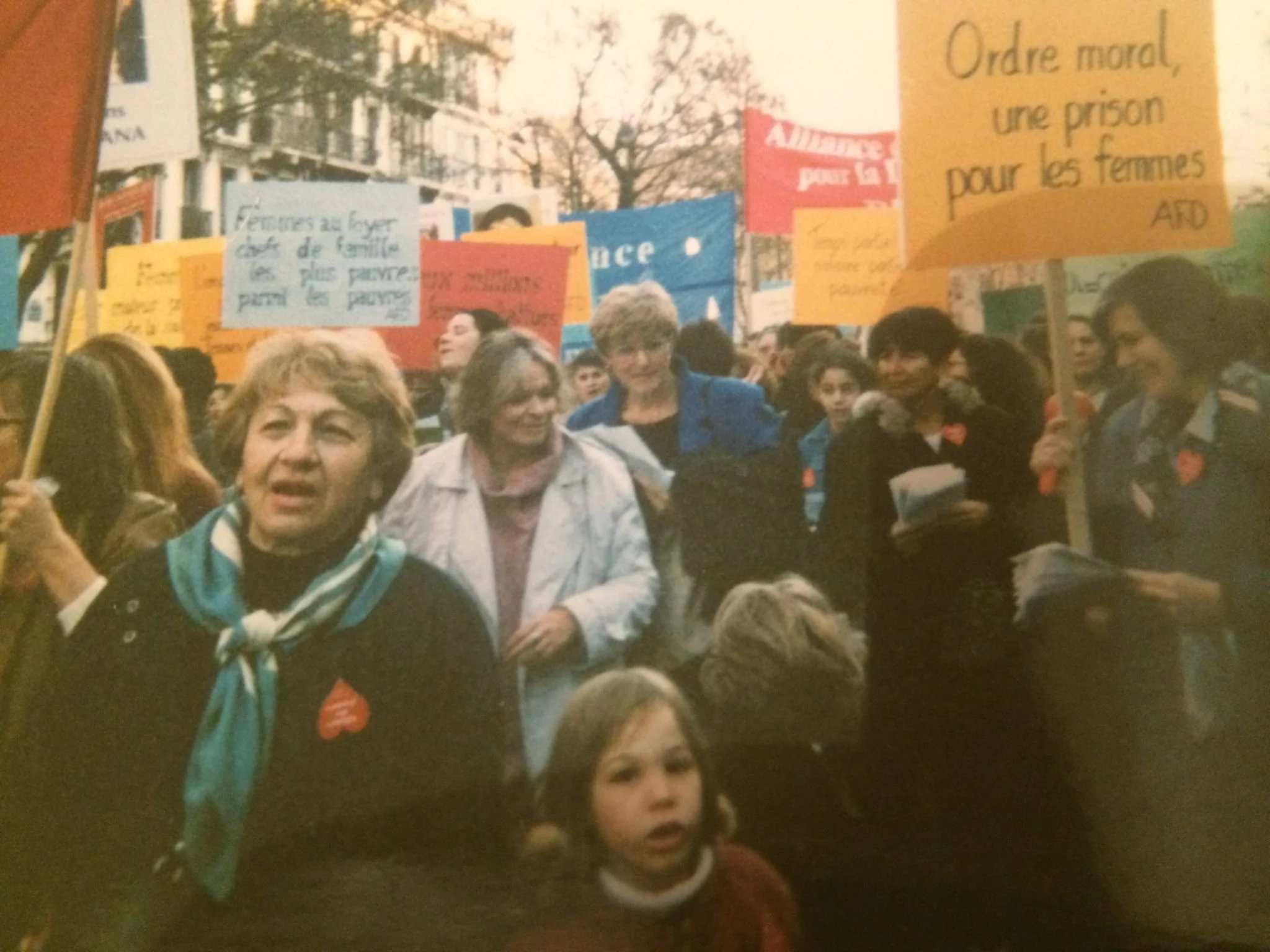
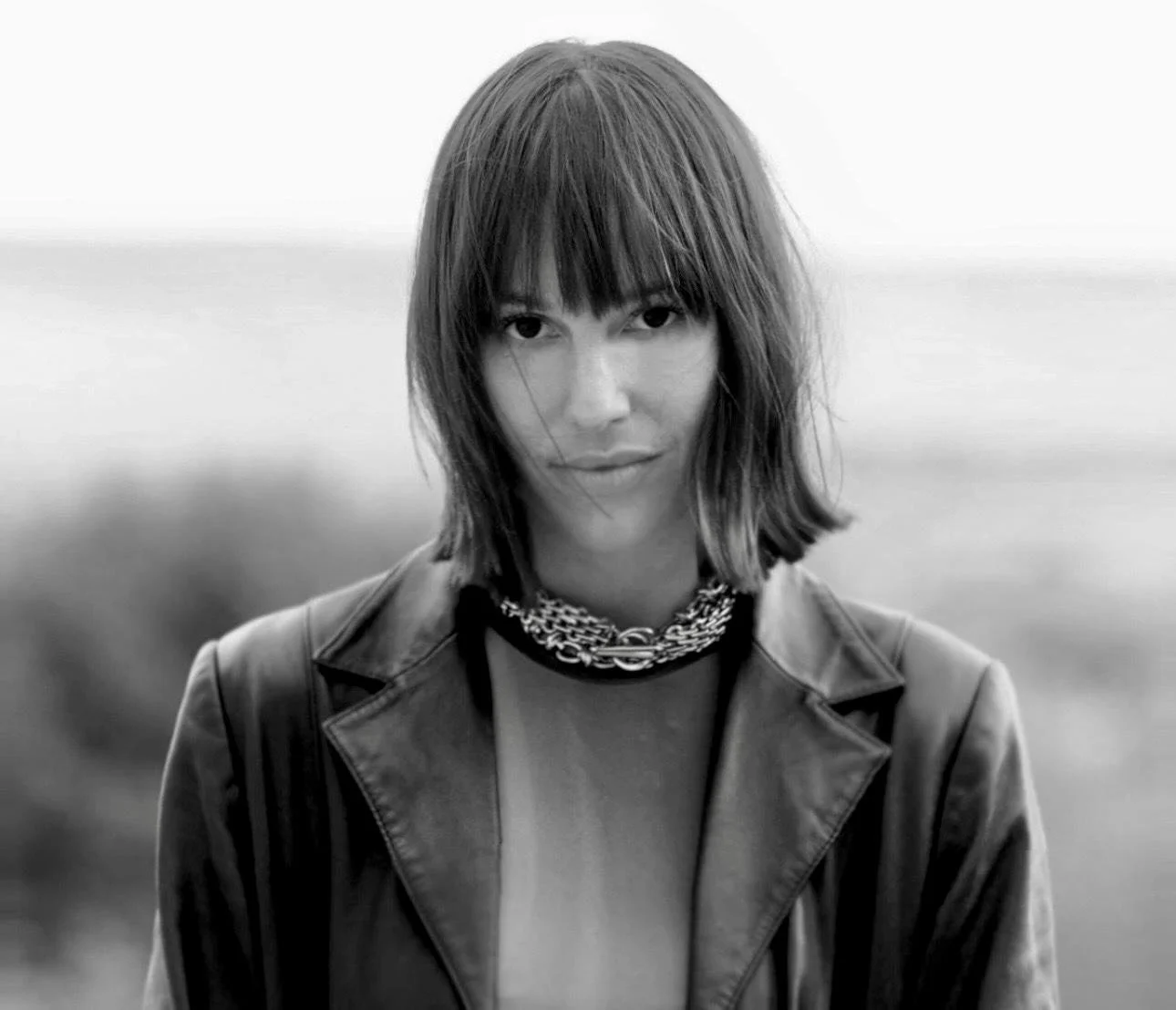
Chloé and her grandma at a protest.
O.B: At what age did you become interested in cinema?
C.B: I was about 18/19. Even though my mom was not that supportive — I suppose she was worried as a mom — my Godmother was very encouraging. She told me: ‘You must do it; there isn’t anything you need to doubt about yourself. You must make your films.’ I sent her my scripts, and she sent me feedback — I was so young at the time. I always had huge emotional support from my Godmother. I understood that ‘c’est ta façon de militer’ [this is your way of being an activist]. I couldn’t say ‘I cannot do it’ — a man wouldn’t say that.
O.B: During your last conversation with Fouque, she told you that “being a woman and making films is your form of activism.” To what extent is it important that we still approach, or view, cinema as a form of activism?
C.B: It’s true. Living in Paris, you know a lot of people in cinema — including Justine Triet, who won the Palme d'Or [Anatomy of a Fall, 2023]. I knew Justine as back when she directed her first feature film, we had the same producer. Now, it seems normal that females are winning the Palme d'Or. However, this is not at all the case. Growing up, I gravitated very quickly to those female filmmakers who were about 10 years old than me. But, I cannot remember that many female filmmakers — that means something! Even in my fine arts school, there were only guys. Now Justine [Triet] and Julia [Ducournau] have won Palme d'Or’s, but it was years after Jane Campion. Of course, MeToo, happened. But all of this is very recent. How come the female director is still so rare? When thinking of prominent filmmakers, we nearly immediately think of males.
O.B: You learned piano at the age of 5 on your grandma’s lap and later studied at the Conservatoire. Committing to filmmaking around 18, you earned a place at the l'Ecole Nationale Supérieure des Beaux Arts de Paris-Cergy. Can you talk about this transition?
C.B: The music led me to the cinema. I practiced the piano from such an early age. Instead of reading books I was reading music. It was my first language. I was into music through my grandma. There was a lot of projection, my mum and grandma thought I was going to become the pianist that they couldn’t be. When I was a teenager, it was very lonely. I was going to have a very lonely life if I continued. That was not me, or my personality, at all.
I quit the piano and really didn’t know what to do with myself. I subscribed to a preparatory school (ecole preparatoire aux concours des ecoles nationales supérieurs des beaux-arts) to help me pass the entrance exams for the big national art schools. That’s when I met some interesting people. Some who were very involved in cinema and were a part of a huge cinema culture — something I hadn’t been experienced before. I started to watch a lot of films, such as Apichatpong [Weerasethakul], Harmony Korine, and Larry Clark. I wasin a band for a short period too, as I was trying to explore music and piano in another way. We spent our time watching cinema, trying to create music on Abbleton, and making videos. It was all experimental. We barely slept. It was very creative.
O.B: Can you share a bit about your early experiences at preparatory school?
C.B: I remember my teachers becoming a bit lost with me. I was not a very good painter or drawer. I didn’t have the sign of talent that you could see with other students. I used to take photography and create décor [set designs], and a teacher encouraged me to make a video. I grabbed my mom’s Sony DV camera. She filmed me from birth until I was 16. Maybe, in my subconscious, I saw my mum with a camera. I don’t really remember, but now I have all this footage. It was not just from vacations; a lot of footage was from everyday life. I got this little DV, and, for my first video, I put my grandma alone in the living room. I pretended it was at the end of a birthday party — one decorated as though it was for a kid. My grandma sat in her pyjamas with ‘Rectangle’ by Jacno playing. It was super weird. I called it La fête triste [The Sad Party]. My teacher was like ‘woah, that’s great’, and encouraged me to keep going. It was the first of a long series of video I made.
O.B: After your first year at the “Beaux Arts de Paris-Cergy”, you came close to being expelled. What led to the near expulsion, and what saved you?
C.B: [laughs] I was bored, I guess. At 8am in class, I would fall asleep. It was an hour travel to the school, and I was probably going to bed around 3 or 4am every night. I wasn’t really the perfect student. Some teachers saw me and the fact that I wanted to make film directly as pretentious. Especially this one teacher, who tried to expel me. She told me that ‘this isn’t way the to do it’ and that I was a bad student, ‘you’re not listening.’ At the end of that year, I made a short film with a team — my first experience with other students from other cinema schools. It was not experimental; it was a 20’ short narrative film. One of the teachers, Jeff Rian — a great artist and musician — alongside the director of the school protested that they could not fire me because of this film. It’s funny, after 5 years and my Masters, an earlier teacher came up to me at my graduation ceremony and said: ‘I was wrong about you.’
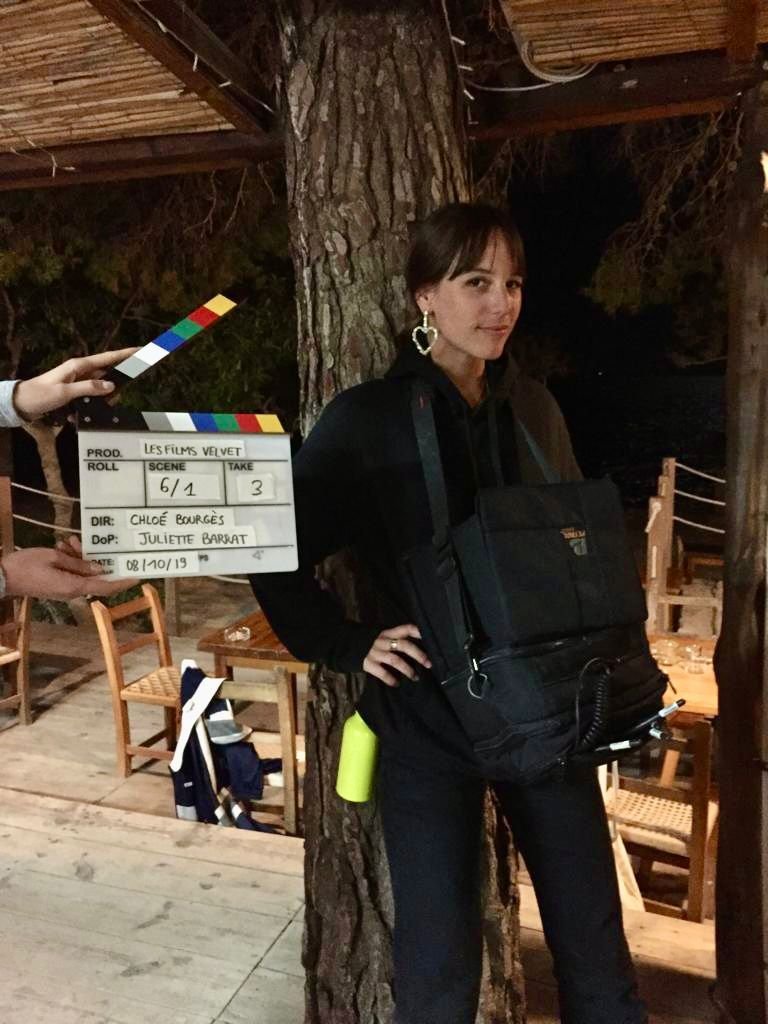
Chloé on set
Encarnación (2017) film poster
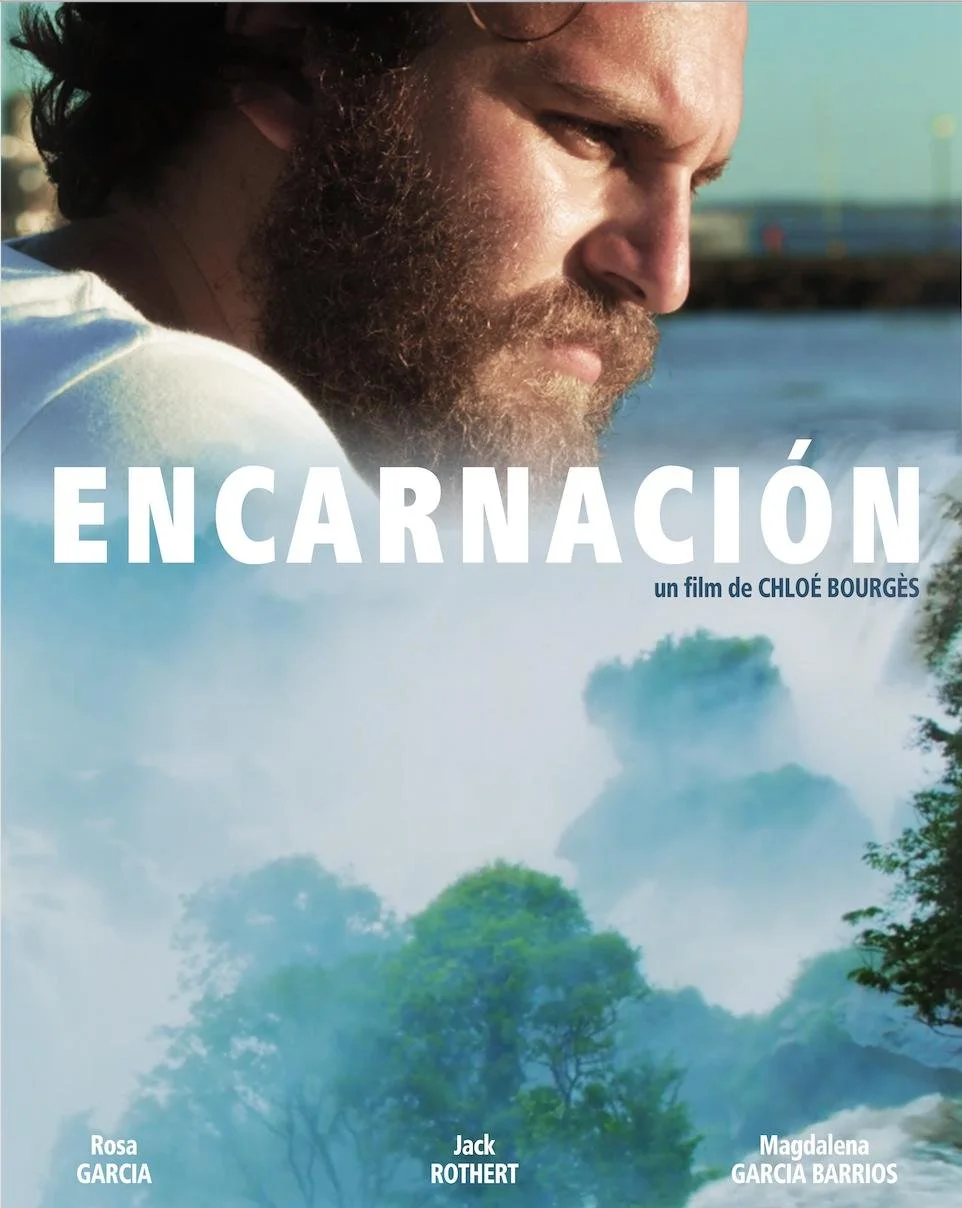
O.B: Encarnación (2017) is a tender and powerful meditation on time, loss, and memory. It’s a ghost story that rests along the fragile threshold of fiction and documentary. You enact the role as writer, director, and editor on the project, as you do on many of your films. Can you talk about the birth of the Encarnaciòn?
C.B: Ideas always come straight from my life, from what I am experiencing or going to experience. At the time, my grandma was slowly dying. She was very old. I was preparing myself for the fact she was going to pass away. But, there’s always magical stuff in cinema. Before Encarnaciòn, I made a film, Ceremony (2015), with Jack Rothert. During the shooting for Ceremony, Jack lost his grandma. His grandma was in Paraguay, and we were shooting in Andalusia, Spain. I asked him, ‘do you want to stop the shooting? Do you want to go to the funeral?’ He had a long talk with his family, and insisted: ‘No, let’s keep the shooting going, because it’s what my grandma would have wished.’ Surrounded by these emotions, we shot in a ghost-like atmosphere. Three years after Ceremony, we shot Encarnación. I wanted to make a film about loss, grief, and ghosts.
O.B: How close does the ‘cinematic’ rest to ‘real’ life?
C.B: At the time, my grandma was still alive, but she passed away a year after the film was made. Encarnación was both a preparation for me, and a homage for Jack’s grandma. During the film, Jack’s character says: ‘I remember when you passed away, I was in the same kind of field, with the same kind of trees...’ It is referencing a scene from Ceremony. That’s how close cinema and life are to one another. Writing the film alongside Jack, we decided to go to Paraguay, the land of his grandma and mom, to explore the complexities of loss. Now, I know these sensations even deeper, especially after my grandma passed away. She helped raise me with my mom. My dad passed away a year ago, too. Grieving processes are very weird.
O.B: How much is filmmaking embodied in improvisation, reaction, and ultimately, chaos?
C.B: I have directed two kinds of films: films when I was by myself and my camera, and others that were very traditional, with a proper team, some producers, and state money. They’re completely different processes. The first is my way to be with my camera, my sound system, and my actors. This is how I feel comfortable. I need intimacy within my practice. This way of making film is already improvisation. You’re just with the actor, filming them as a person. It is very intimate, and this person has huge amounts of freedom. My physical process and approach to filming leads to improvisation and chaos. Chaos, I try to avoid [laughs]. Though, it is the risk you take when you film like this — when you’re by yourself. For example, I am currently editing a film where I shot a young mom and her 3-year-old son for a month. Chaos would have been crisis with the kid — him breaking the camera, or something like that. Fortunately, that didn’t happen, but it was a real possibility. Maybe I’ll go home with a film, maybe I won’t. This is the risk to take.
O.B: In 2017, you co-formed Feÿ Arts Festival. An incredible initiative: bringing together over 100 artists (cinema, art, music, dance, performance, publishing, gastronomy) for a weekend at the Château du Feÿ in Burgundy. What underpinned this project?
C.B: The idea came from Jessica [Angel], a childhood friend. She reached out to group of friends from Paris, who are all in the arts. Jessica had this entrepreneurial and ballsy attitude that we didn’t have. She had access to this beautiful Château and suggested we do something. After a couple months of weekly meetings, we decided to go ahead with a three-day festival. Multidisciplinary festivals didn’t really exist at the time in France, and they still don’t in this way. Each of us oversaw one discipline; I oversaw the cinema. We held the first and second edition, and then Covid happened, forcing most of the team to quit. We hesitated to continue, but I convinced Jessica. Her and I were then shared a lot of the responsibility — from programming, producing, and other logistics. The two of us, alongside a new team, successfully held two other editions. Then we decided to stop. Jessica had a baby, and I lost my dad. I went to shoot a film in Greece, and then the project of the bar-cinema gained momentum. The festival brought so much joy and taught me so much, but it’s also very hard — at some point you need to retire [laughs].
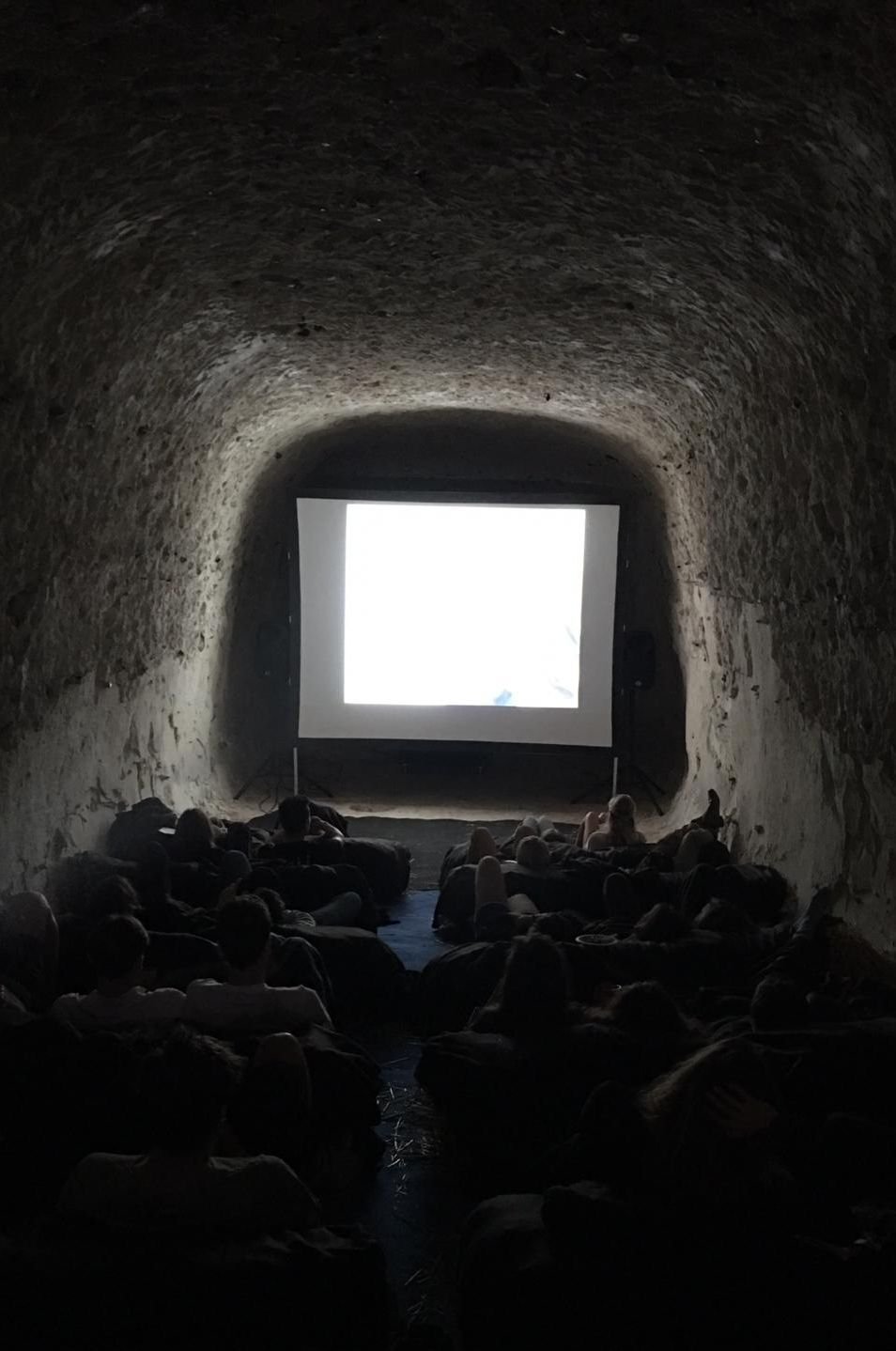
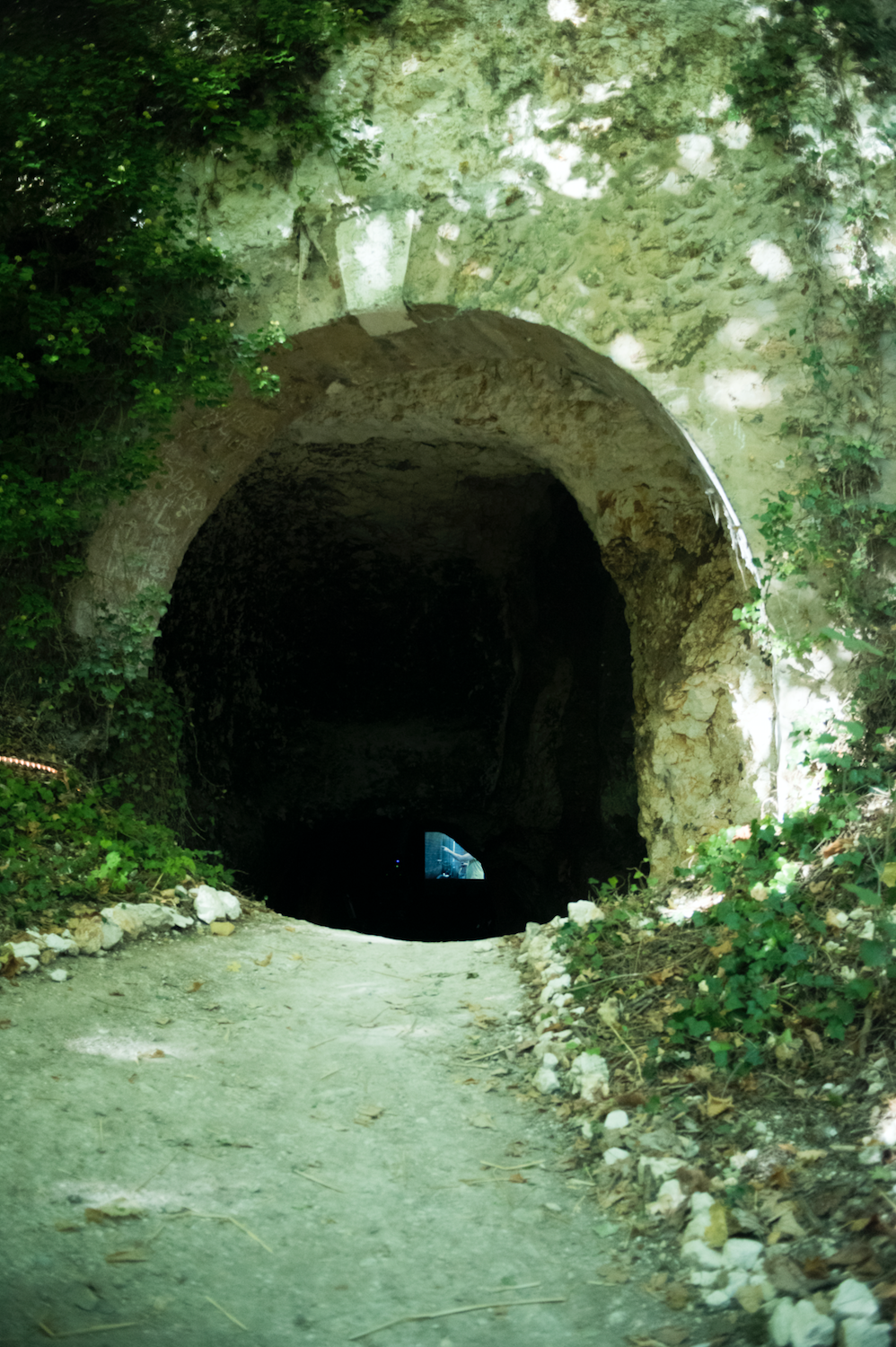
In 2018 & 2019, the castle's underground passages were transformed into an ephemeral cinema for the festival.
O.B: You’re very hard to describe in just a few words, embodying how we can be so many things while making our passions work in one space.
C.B: It’s funny, because when I was in my 20s, it was a shame to be like this. At the time, you had to be just one thing. I felt so depressed for many years, as I did not want to be placed in a box. I thought ‘what’s the problem with me?’ I was very anxious. Now, I’m 35, and I’m very happy. This is very interesting because the world has evolved, and the young generation are nothing like mine. They’re fearless. It’s great.
O.B: In May of 2025, you opened Out of the Blue, a natural wine bar and micro-cinema on Rue Saint-Maur. What led you to naming the space after the film?
C.B: The biggest cinephile I know, Nils Bouaziz, is the founder and owner of Potemkine. He offered me Out of the Blue for my 25th birthday. When I saw it, I was shocked. I thought, ‘that’s so punk and free.’ I wondered how Dennis Hoppper could direct and make this film. If Potemkine never decided to restore and remaster the film in a beautiful DVD edition, I never would have discovered it. One night, at 3am, I decided the cinema would be named Out of the Blue. I wanted to sell Nils’s gorgeous DVD’s, and he generously offered me the rights to screen his films – he was thrilled about me opening the place. Out of the Blue is a homage to many people and things: Dennis Hopper, independent cinema, freedom and rebellion, and Nils and Potemkine. Of course, it’s also a great expression. In the Rue Saint-Maur, it’s completely out of the blue to have a cinema space. When the interior designer and I decided that the cinema was going to be blue, I knew the name was meant to be — it was working for a lot of reasons.
O.B: Did you ever think opening a cinema — whether micro, or conventional — would be in your career trajectory?
C.B: Never [laughs]. Having a cinema has always been a dream. Perhaps it’s the dream of all cinephiles? When I had the possibility, and the timing was right, it seemed feasible. My experience with Feÿ was very valuable, too. I thought: ‘How can it be viable?’ Wine. Wine is the easiest way to make money! My glasses of wine are 6 euro, you can have two glasses and it’s the same price as a movie ticket at a cinema! Of course, free screenings, too — nothing is free anymore. That brings a lot of attention.
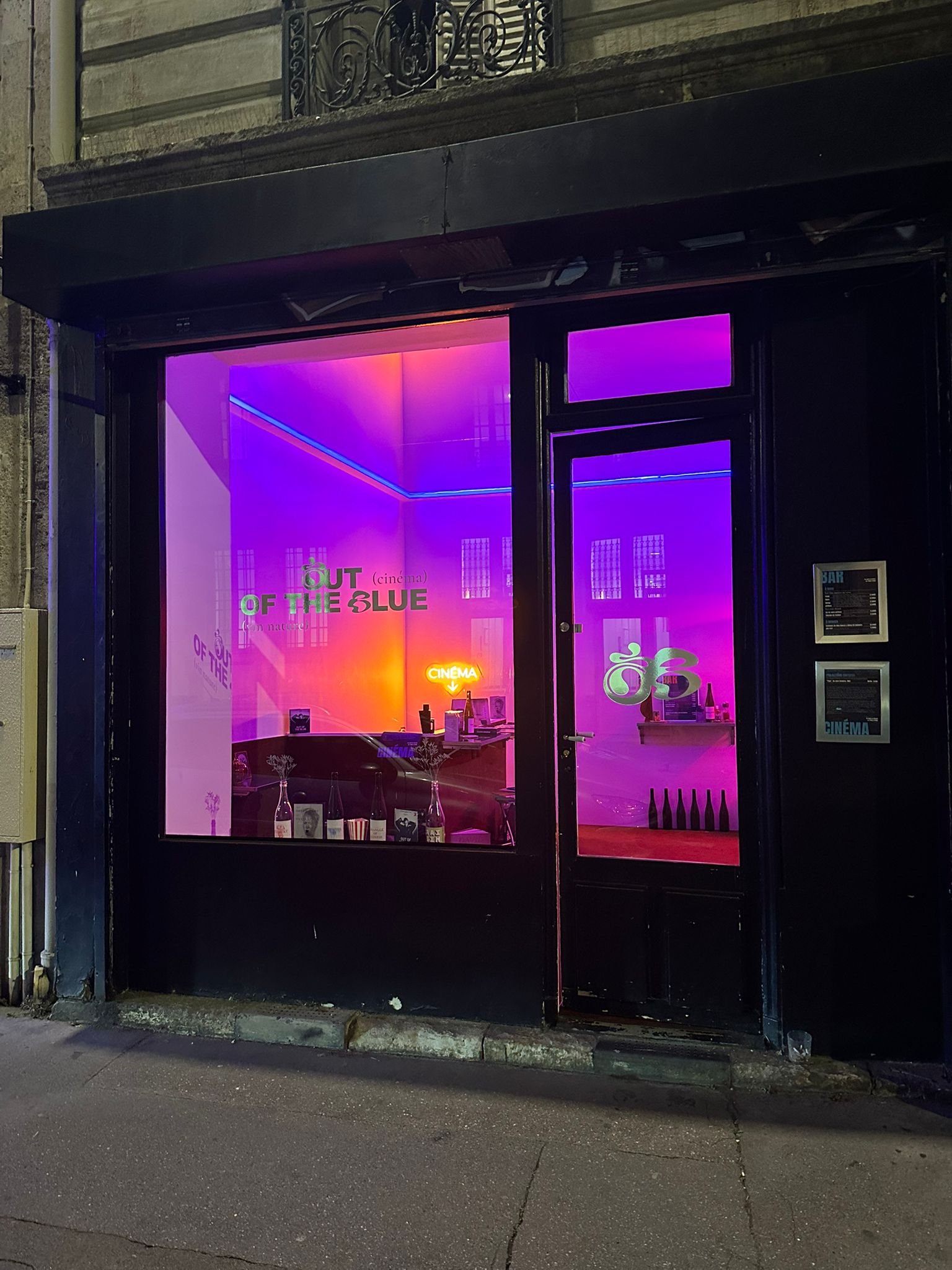
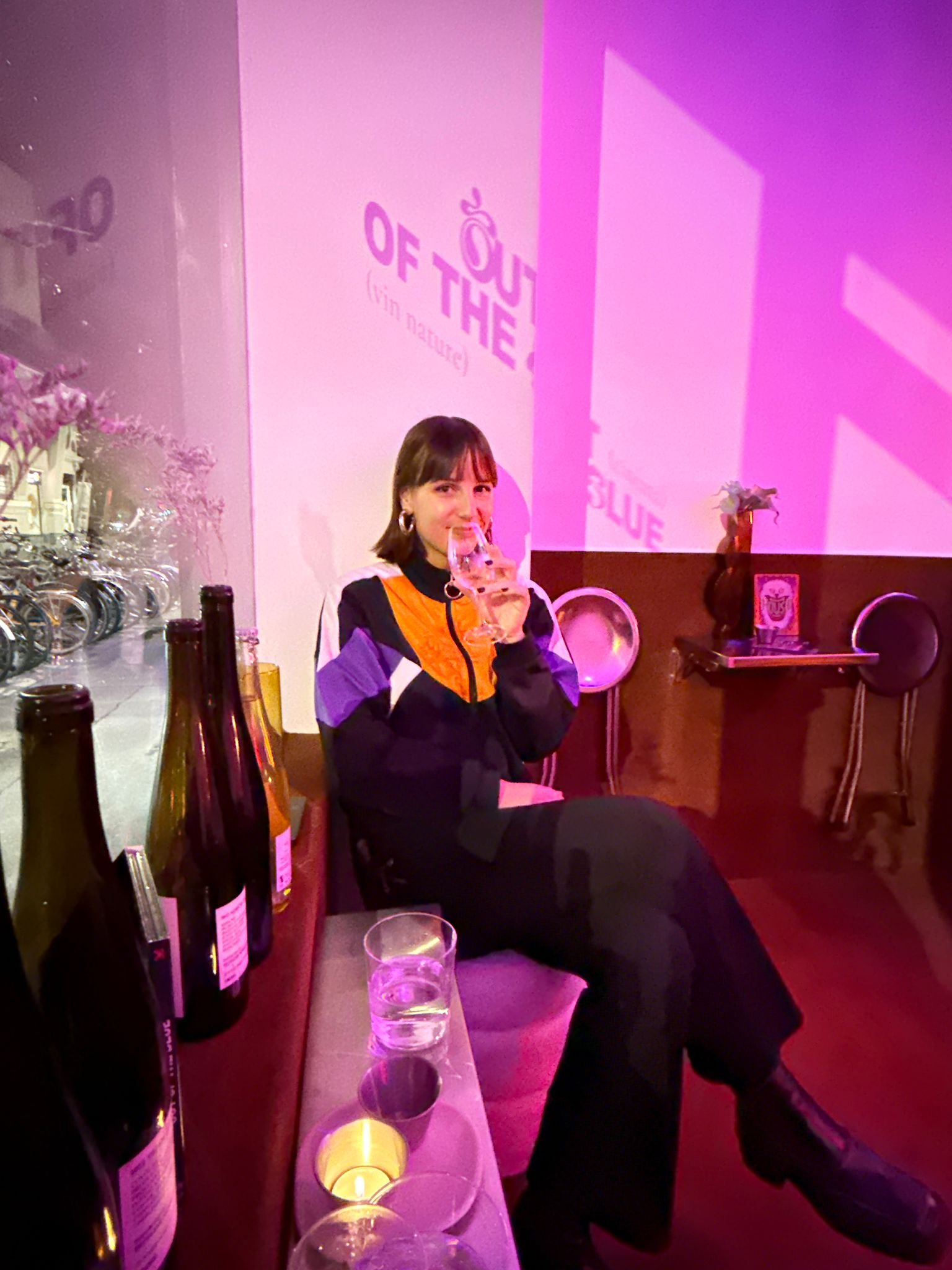
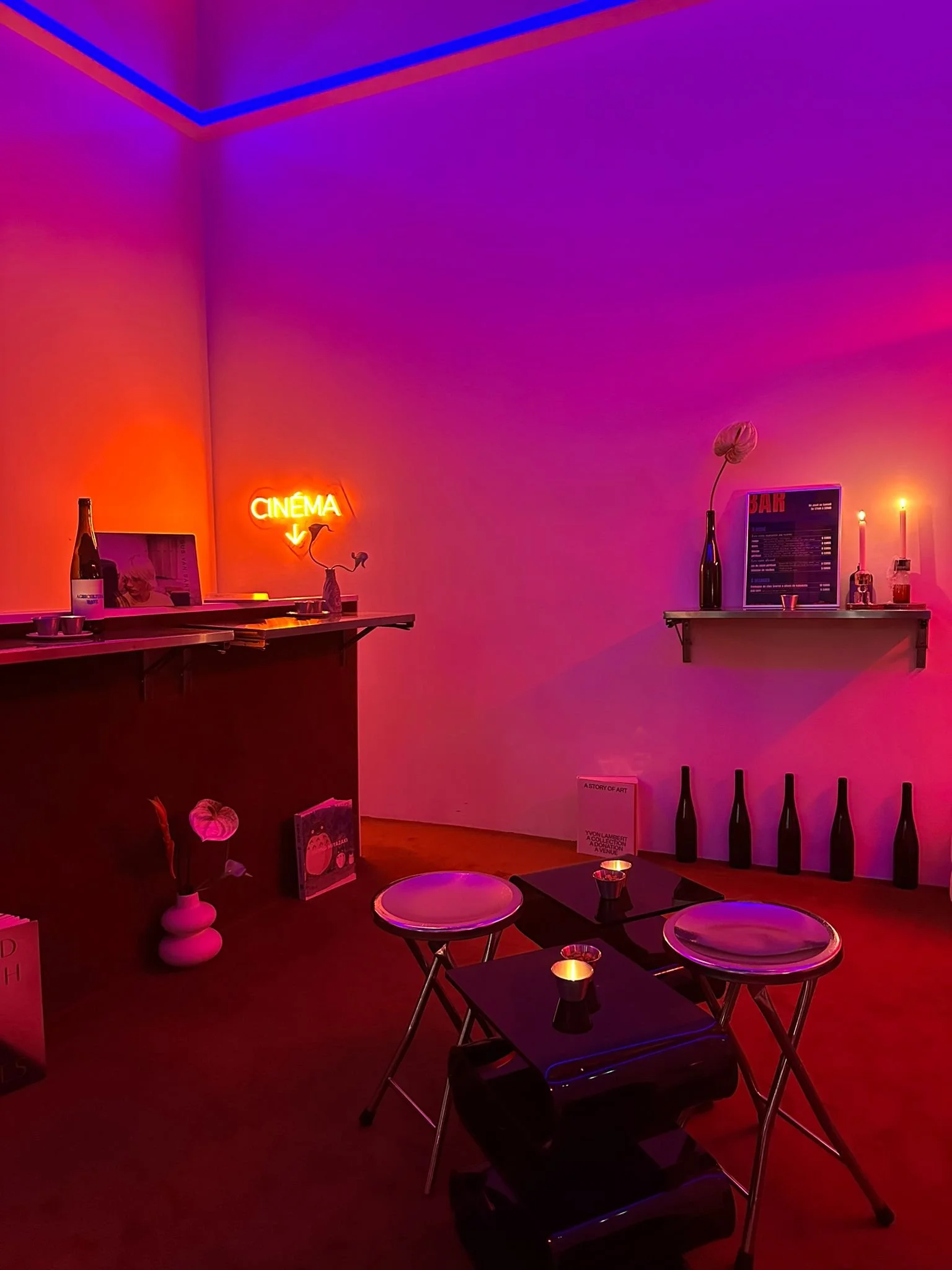
Out of the Blue: 9 Rue Saint-Maur, 75011 Paris
O.B: How much of Out of the Blue is shaped from your own experiences at the cinema?
C.B: My strongest, and clearest, memories of going to the cinema are by myself. When I would look to my left and see the person next to me crying. I have many memories like that. It’s like travelling alone. I love that you can come to my cinema by yourself, sit in an intimate space and share the experience with someone you don’t know. Then, there is the post-film, which for me, is something that is missing [at other cinemas]. It’s always frustrating when you leave a conventional cinema, because you kind of want to talk to people! You can hear their thoughts, and you want to interact. It was cool to create a bar where after a film, people socialise. It happens all the time, which is great. I run a Sunday night feature-length screening with only 10 people. A lot come alone. They have a glass of wine, we go downstairs and watch the film, then everybody socialises. There are so many great surprises: about what people do, and what they think. Creating a festival is the same, but it’s a larger scale. One passion that I have with this work is being there — not as a boss — but as a human being welcoming and talking to people. In 6 months, there are so many people who know each other because of Out of Blue, and who met here.
O.B: What can cinema offer us today?
C.B: Émerveillement. To stay amazed. To keep the link between people, and humanity. To remind people that they are able to feel something in this crazy world. To keep the dialogue between each other through the arts.
Fin